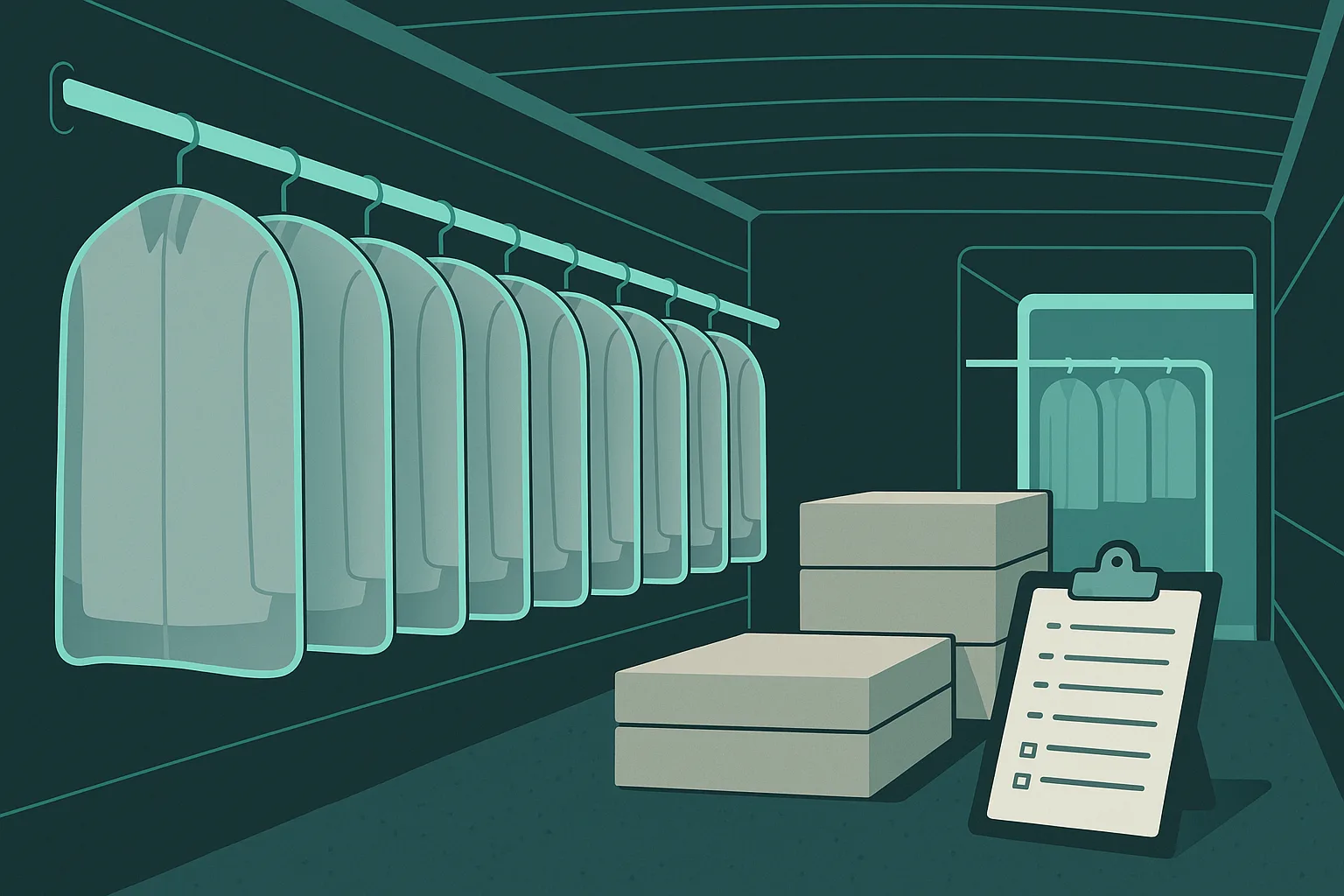
GOH (garments on hangers) transport means carrying clothing on hangers, on rails, without folding. Most depends on preparation: well-protected and clearly marked pieces pass through loading and receipt at the consignee faster. Below is a practical checklist for brands, distributors and retail chains.
In brief
- GOH reduces repacking, but requires covers, grouping and hanging lists.
- The length of the garments affects how many rail levels can be used.
- Agree in advance who hangs and removes the garments and what the dock arrangements are.
- On receipt, count the pieces and note any reservations on the consignment document.
- Plan collections and seasons in advance, as they require the vehicle to be matched.
How GOH differs from carton transport
In carton transport, clothing is folded, packed and stacked on pallets. In GOH, garments stay on hangers, hung on rails in the cargo space. This usually reduces the need for pressing and for repacking in the warehouse before the goods go on the shelf.
The price of this convenience is greater care in preparation: pieces must be protected, organised and marked, because there is no carton to make this easier. We describe the details of the service on the page for GOH transport.
Who GOH transport is for
- clothing brands sending collections to shops and partners;
- distributors and distribution centres;
- retail chains replenishing stock in their outlets;
- showrooms and show organisers for whom the appearance of the pieces after delivery matters;
- contract manufacturers handing finished goods over to a brand.
How to prepare the load
Covers and hangers
Covers protect clothing from dust and abrasion. Consider whether the hangers are uniform and sturdy, and whether pieces will slide on bends. Describe the type of protection and the way of hanging in your enquiry, because it affects the load layout.
Grouping by model, size and shop
It is worth grouping pieces according to the logic of collection: models, sizes or destination shops. If a delivery covers several points, separate groups on the rails make unloading easier and reduce the risk of mixing up pieces.
Hanging lists
Good practice is a packing list per rail: what hangs on a given rail, how many pieces, which models and sizes. Such a list makes loading easier, as well as counting on receipt and investigating any discrepancies.
Marking
Mark rails or groups so that they can be recognised without unpacking: order number, destination shop, collection. Consistent marking on the list and on the load matters more than its form.
Garment length and rail levels
The length of the clothing determines how many rail levels can be used. Short garments — shirts, blouses, jackets — usually allow more levels to be used, while long coats and dresses require full height. When enquiring, therefore, state which lengths predominate and whether the load is mixed. The final layout depends on the vehicle and on what is agreed for the specific order.
Loading and unloading
Before the job, agree with the sender and the consignee:
- whether access is from a dock or from ground level;
- what the loading and unloading window is and whether it is restricted;
- who hangs the garments on the rails and who removes them;
- whether the consignee has trolleys or racks to receive the load;
- what the delivery sequence is, if there is more than one point.
These arrangements are worth putting in the order. This way the driver and warehouse staff know what to expect, and waiting time does not surprise either party.
Receipt at the consignee
On delivery, count the pieces and compare them with the hanging list. If you find shortages or damage, note the reservations on the consignment document, preferably in the driver’s presence, and take photos. A report made only after the fact can be harder to resolve, so document the condition immediately. The claim form and deadlines depend on the documents and the terms of the order — it is worth checking them before the first delivery.
Combining GOH with cartons
Sometimes a brand sends hanging garments together with accessories or stock in cartons. Such a layout may be possible, but it must be agreed at the enquiry stage: how many hanging pieces, how many cartons, and what their dimensions and weight are. The loading sequence and the protection of hanging pieces from pressure by cartons depend on this.
Seasonality and collections
Collection deliveries often fall in busy periods, when production, warehouse and shops have to be coordinated. Plan transport in advance: the sooner you describe the number of pieces, delivery points and time windows, the easier it is to match the vehicle and route. We confirm the availability of a suitable vehicle for a specific route and date, so do not assume it without agreement.
What to prepare for your enquiry
- the number of pieces and, if possible, the number of rails or linear metres;
- garment length (predominant lengths) and type of pieces;
- the way of hanging and protection (covers, hangers);
- collection and delivery points with addresses;
- loading and unloading time windows;
- information on any cartons in the same order;
- an agreement on who hangs and removes the garments;
- warehouse or shop requirements (dock, trolleys, receiving hours);
- whether a vehicle dedicated solely to your load is needed;
- contact details of the person responsible for collection and delivery.
Describe your GOH load
If you are planning a collection delivery or shop replenishment, contact us and send the data from the list above. We will check the options for your route and date. You will find the scope of the service on the page for transport of garments on hangers.
Related material: How to prepare an enquiry for a transport quote · FTL or part load — how to choose